

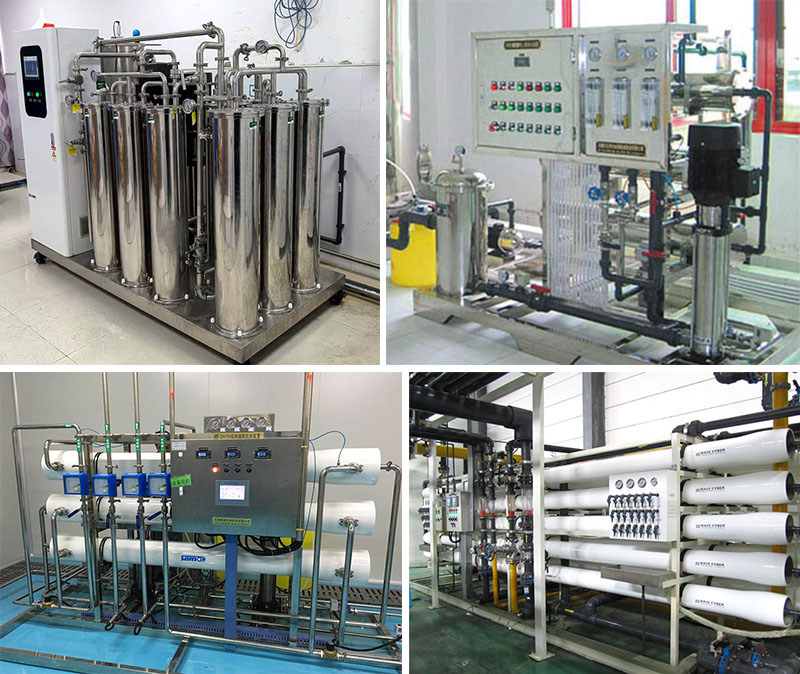
反渗透装置是一种基于膜分离技术的高效水处理设备,其核心原理是通过半透膜在高压作用下实现溶剂与溶质的分离。以下是其关键特点和工作原理的详细介绍:
1. 技术原理
渗透压与反渗透:自然状态下,水分子会从低浓度溶液通过半透膜向高浓度溶液渗透,而反渗透通过施加超过渗透压的外力(通常由增压泵实现),迫使水分子反向流动,从而截留盐分、重金属等杂质。
膜结构:RO膜孔径仅0.0001微米(约大肠杆菌大小的1/6000),可过滤99%以上的溶解性盐类、细菌及病毒。
2. 核心组件与流程
预处理系统:包括PP棉滤芯(拦截泥沙、铁锈)和活性炭滤芯(吸附余氯、异味),用于保护RO膜免受大颗粒杂质损伤。
反渗透膜:核心部件,脱盐率可达96%-99%,产水接近实验室纯水标准。
后处理:部分设备会添加口感调节滤芯(如椰壳活性炭)改善水质。
3. 应用领域
家用:提供直饮水,尤其适合水质污染严重地区。
工业:用于电子、医药、食品等行业的高纯水制备及苦咸水脱盐。
The reverse osmosis device is an efficient water treatment equipment based on membrane separation technology. Its core principle is to achieve the separation of solvent and solute through a semipermeable membrane under high pressure13. The following is a detailed introduction to its key features and working principles:
1. Technical principle
Osmotic pressure and reverse osmosis: Under natural conditions, water molecules will permeate from a low-concentration solution through a semipermeable membrane to a high-concentration solution. Reverse osmosis, on the other hand, involves applying an external force (usually achieved by a booster pump) that exceeds the osmotic pressure, forcing water molecules to flow in the opposite direction, thereby retaining impurities such as salts and heavy metals.
Membrane structure: The pore size of RO membrane is only 0.0001 microns (approximately 1/6000 the size of Escherichia coli), capable of filtering out over 99% of soluble salts, bacteria, and viruses.
2. Core Components and Processes
Pre-treatment system: It includes a PP cotton filter (to intercept sediment and rust) and an activated carbon filter (to adsorb residual chlorine and odor), serving to protect the RO membrane from damage caused by large particulate impurities.
Reverse osmosis membrane: a core component, with a desalination rate of up to 96%-99%, producing water that is close to laboratory pure water standards.
Post-treatment: Some devices incorporate taste-adjusting filters (such as coconut shell activated carbon) to enhance water quality.
3. Application Fields
Household use: Provides direct drinking water, especially suitable for areas with severe water pollution.
Industry: Used for the preparation of high-purity water and the desalination of bitter and salty water in industries such as electronics, medicine, and food.
